
Walter Sciacca -A Serial Entrepreneur

Evolution is critical to growth and survival. Adapting itself to changing times and tides is crucial, whether for a creature, species, society, or business. Those who refuse to change, become obsolete and eventually extinct.

Without letting go of their original, unique idea, services, or products, businesses must find ways to incorporate the demands of the current trends, technology, and customer requirement. Today, we present the story of a leader, who has always tried to have an inspired vision when it comes to creating business trends instead of following them. This has eventually led him to create innovative development and business models. He is, Walter Sciacca. A brand, a reference point, and an unrivaled leader.

From the Beginning

At the age of 25, Walter founded his first company for the organization of circuit events, computerizing all the organizational steps and therefore being the first company in the world to use such a system. He changed the way in which events are organized and managed. Everything was born from a passion for motorsport and IT, to which organization and management were added. The aim was to innovate and create new trends without following existing ones.

As with other well-known companies in the world, everything started in a garage, inside a small racetrack in the south of Italy, where Walter transformed the garage into an office. His business grew exponentially and achieved a six-figure turnover in its second year. Over the years, he has organized over 1500 events in several racetracks in Italy, in other European countries, and even in other continents, winning over the most important brands of Automotive and Motorsport for the organization of their events.

A well-calculated shift

Walter didn’t want to keep himself limited to the events. So he decided to shift his field of action to management consulting. This was the time when some international racetracks called him directly for a consultant role, initially for the organization of their events and then as a consultant. He was entrusted with implementing ideas to improve racetrack management, setting up a new business model to increase their turnover, profits, the quality of their events and competitions, and thus their national and international prestige.

One of these many consultancies turned into an important role, as he was nominated CEO and Managing Director of the Imola Circuit – Enzo and Dino Ferrari, one of the world’s most important and historical racetracks. His mission here was “time-based”. He was entrusted with the difficult task of boosting the fortunes of a historical racetrack that was heading towards financial decline. He became the creator of the facility’s sporting and economic revival, managing to triple, in his first year of management, the turnover and laying the foundations for the return of the Formula 1 World Championship, an event which then materialized in 2020, after a 14-year absence.

In just two years, Walter achieved all the objectives he was given, and then left the role a year ahead of his mandate, to work on the countless consultancy requests that he had received in the meantime. He subsequently worked in managerial consultancy and the creation of new racetracks or the improvement in how existing ones are managed. In 2020 he founded his eighth and current company, Sciacca International Projects, based in Milan.

The clients of Sciacca International Projects are governments, worldwide investment funds, multinational construction companies, project developers with high economic and technological impact, as well as individual industries and entrepreneurs who, alone or as a group, want to finance and carry out private or commercial projects.

What makes Sciacca Different?

In one word: energy. The energy to transform. The energy to create something new and exciting. Sciacca believes that “traditional” racetracks must change their business models, and they must carry out a real change in direction for the future, over the next 10/20 years. Walter himself developed a paradigm change that allows the concept of a racetrack to change, a structure that increasingly meets the needs of an elite audience, with the solution to obtain benefits in terms of profitability where there are loss-making balance sheets. The sports facility, in this newly developed model, takes on the importance of a business opportunity, with a particular emphasis on efficiency.

Hence the transformation of a sports facility – racetrack – to a real estate operation.A radical change in planning is needed to be able to sustain operations with positive outcomes.

There are two types of projects that Sciacca Projects will present directly to clients: the first is aimed at an elite client: luxury villas that will have a private racetrack, as well as other activities and services.

The second is aimed at a wider audience: a traditional racetrack, and therefore able to host national and international events, but only in appearance, as they are designed to host a whole range of activities that have never been held in a “racetrack” before.

Then they are working on a project that concerns a completely innovative Automotive Mall; a project to build the world’s first completely covered racetrack. They are also working on a project to build the world’s biggest virtual reality and simulators park.

Dealing with Predicament

As a leader, Walter comes across situations every other day when he needs to take tough calls. There also are moments when decisions aren’t as simple as they seem with emotions overriding rational choices. On dealing with such situations, Walter feels whatever condition leads to an altered emotional state, it’s important to know that those who manage to defuse their emotions ‘win’. Experience alone isn’t enough to defuse your emotions, but specific training courses that help you to learn how to manage your own emotions in the most extreme situations also help. “I’ve had the privilege of participating in training courses with the most well-known professionals in applied psychology regarding problem-solving, negotiation, persuasion, knowing how to manage mental traps, active listening, strategic communication, and so on. You need a lot of commitment and continuous learning because in life you either learn or you stop,” shares Walter.

He also feels that most leaders tend to take too much pressure on themselves and find it hard to delegate important or even everyday decisions. On a personal note, he finds micromanagement too restrictive and detrimental to the business and prefers efficient management. His style is horizontal, not vertical or pyramid management, and likes to inform everybody of the business plans. He likes to encourage and reward when the circumstances require so.

“I’ve always said: “if things go well it’s everyone’s merit, but if things go badly, it’s all my fault! It doesn’t matter who’s made the mistake, it’ll be my fault.”

In general, forms of communication are fundamental on all levels, you have to be able to create authentic relationships with true interests, you need to be empathetic, you have to be able to understand others as psychological aspects are important,” says Walter.

He feels leaders should be more empathetic. They have to look at things from different angles and ask themselves what they would do if they were in the other person’s shoes. They need to give people who haven’t got experience a chance and help them to grow professionally with the awareness that they’re working and can make errors, and therefore leaders have to be ready to resolve possible errors, making those who make them see them as a lesson in what not to do, and explaining how to do it better. It isn’t a punishment, but instructions for the future.

Leaders have to indicate the objectives and ask the employees how they intend to reach them, without imposing their way of working straight away. “Sometimes you’ll be surprised and you’ll discover that this objective can be reached in different ways, some of them quicker and cheaper than others, so always listen without interrupting,” shares Walter.

He continues, “Then ask for advice and decide whether to give guidelines or let them do it by themselves. The new recruits that I put in the teams are those who must freely express their ideas, so I like to delegate and I do it continuously. You have to trust young people and at the same time, those who already have years of experience, without creating competition but rather constructive challenges.”

So what other qualities make a Leader?

Being able to listen to understand and not just to hear;

Being able to communicate efficiently and empathetically; and 

Being able to defuse emotions in tense situations in order to manage relationships empathetically and with emotional intelligence. 

The above are the first three that come to Walter’s mind, but obviously, there are many others: empathy, being able to resolve conflicts, knowing how to inspire, knowing how to motivate, being able to put yourself in other people’s shoes, knowing how to look at things from different angles, driving your own team without giving off the impression that you’re commanding them, just driving them, flexibly managing time, modesty, curiosity, the drive to learn and improve, passion, resilience, perseverance, recognizing merits, delegating, encouraging, motivating and being a “psychologist”. This is because one mustn’t think that others will do what they, the entrepreneurs or managers, are willing to do. Emotional intelligence and empathy are fundamental for one’s own team and with clients. “You need to do a bit of soul searching, and when needed, make difficult decisions and have the strength and determination to continue defusing emotions and activating rationality, but always with tact and respect. Raising your voice doesn’t work, punishing errors is another error. Naturally, a good leader must have a vision, he must see where others can’t see yet, and take the whole team with them without leaving anyone behind,” explains Walter. 

Rewarding Moments

Hundreds of press articles around the world have been dedicated to Walter, as well as acknowledgments and prizes. The one he cherishes the most was in 2012, the same year his daughter Vittoria was born. “In October that year, I was awarded an honorary degree in Economics and Commerce with a Ph.D. It was a great surprise for me, but throughout my life, I’ve never paid attention to prizes or acknowledgments because, for me, the best one of all is the satisfaction of our clients, as the success of our business is down to them,” reminisces Walter.

As for the young entrepreneurs who look up to leaders like him, Walter feels that while it’s good to have passion when they start, it mustn’t blind them. Passion must be balanced with rationality and analysis because so many professionals have gone bankrupt following their passion. 

He shares that it’s important to continue learning and one has to travel a lot to see for themselves how others are developing. While one shouldn’t blatantly copy others, one must take hints on how to do things differently and better. “It’s important to never stop updating your knowledge, participating in training courses, conferences, and how useful it can be for continued growth because you never stop learning. You must be resourceful but humble at the same time. Above all, never give up, you need to try and try again until you achieve your desired goal. Don’t be scared to make mistakes and learn from them. In conclusion, I’d recommend being patient and proactive at the same time” advises Walter.

Living with the New Normal

The pandemic has impacted every sector bringing about either sudden change or a fast-pacing ongoing change process. When asked how has it impacted his company and its growth plans, Walter says, “The dreams I had in my drawer I’ve realised them all, now I’m working on the ones I have in the wardrobe and then there are the dreams I have inside the warehouse and it’s a very, very big warehouse.”

He believes that the future lies in the fragmentation and sectorisation of the target audience, in a market where the ability to evolve is the key to success. The recipe for success calls for a fundamental and not at all expected ingredient. It’s the vision, the ability to “see” in advance the evolution of the market in which you work, and to achieve it, you have to be real “visionaries”, able to keep project ideas in your ‘warehouse of dreams’, thought up even 5 or 10 years earlier and destined to become reality in the coming years, where the only limit is to have no limits.

The Covid-19 pandemic hasn’t created problems for Sciacca, regarding its future objectives and projects. It’s certainly accelerated some processes, especially in the IT sector which has already reached incredible levels of development. The IT sector has always been a strong point of the businesses Walter has established and Sciacca was already way ahead of the competition. This advantage has proven to be successful because, with minimal effort, they obtained the maximum result. They are able to bring the clients’ projects to life through virtual reality and augmented reality. This is a huge advantage as they can see the project as if it already existed and appreciate its qualities in a “real but virtual” way. “My company has developed projects that won’t be revealed for another 3 or 5 years, and others will be carried out within the next 10 years. These projects satisfy investors and their clients for a long time and in the meantime, I’m already thinking about the next decade, because as I’ve said before, being able to evolve is the key to success but only if you can look towards the future,” concludes Walter Sciacca. 

Dr. Sanjiv Chopra chose to go into medicine at the age of 12 years

Dr. Sanjiv Chopra chose to go into medicine at the age of 12 years, when he had a terrifying experience. He was studying at Saint Columba’s high school in New Delhi, and on a warm, sultry Sunday evening after playing a cricket match, he took a brief nap. When he awoke, he was terrified. His eyes were open and he could not see. He nudged his brother, Deepak, who reckoned that he was not faking it. His uncle, with whom they lived as they finished schooling in New Delhi, as his father – a prominent physician – was stationed 200 miles away, took him to a nearby military hospital. The doctors did not know what was going on. They finally got a hold of his father, who very calmly asked them what happened to Sanjiv over the past several months. They discussed that he had an injury, a sharp cut to his leg and was given antibiotics and stitches. His father asked if he was given a tetanus shot, to which they proudly responded he was. When they responded yes, his father quickly knew that he was having a rare idiosyncratic reaction to this shot. It is an incredibly uncommon occurrence, perhaps 1 in a million. The odds of his father even knowing this was remarkable. The next day, he said to himself that his dharma – his authenticity and moral truth – is to become a doctor.

He has told this story to professors of ophthalmology at Harvard, UCLA, Johns Hopkins, and they are flabbergasted that his father knew this. It is not even a common footnote in medical textbooks, and if it was not for his knowledge in that moment, he may have lost his vision permanently. After that, Dr. Chopra attended the All India Institute of Medical Sciences in New Delhi in 1966. This is where he met his wonderful wife, Amita, as classmates. After graduating, they moved to the United States. Since then, he has been fortunate to have training in gastroenterology and hepatology by Eli Schimmel, Raymond Koff, and Peter Banks, true giants in medicine. Dr. Chopra joined the faculty at Harvard Medical School almost 4 decades ago, and had the privilege of serving as both a professor and the Faculty Dean for Continuing Education at Harvard Medical School for 12 years. He now teaches leadership, medicine, happiness and purpose, and speaks throughout the United States and internationally. In addition, he is the Editor in Chief of the Hepatology section of “Up To Date”, an electronic textbook that is subscribed to by 1.5 million physicians in 195 countries.

Achievements and Awards

He has been fortunate to have his work as an educator and professor at Harvard Medical School be recognized with awards such as the Excellence in Teaching Award by Harvard Medical School and the American Gastroenterological Association’s Distinguished Educator Award. He was also awarded the George W. Thorn Award by the Brigham and Women’s Hospital house staff and Robert S. Stone Award by the Beth Israel Deaconess Medical Center house staff. He was recently the recipient of the Ellis Island Medal of Honor for “Exemplifying outstanding qualities in both one’s personal and professional lives while continuing to preserve the richness of one’s particular heritage”. In 2009 Dr. Chopra was elected as a Master of the American College of Physicians, a singular honor bestowed to only a select few individuals for being “citizen physicians, educational innovators, scientific thinkers and humanists who inspire those around him or her and set the standards for quality in medicine.”

 “My purpose is to fulfill my dharma”

When we asked Dr. Chopra to describe himself in one word, he described himself as “Happy!” He said, “Even though ‘brevity is the soul of wit’, I am going to take the liberty of answering this question in more than a word, but using a phrase. That phrase is ‘I’m living my purpose’. Mark Twain most famously said, T’he two most important days in your life are the day you are born and the day you find out why’”. On that night in New Delhi, Dr. Chopra found his “why”, his dharma, and he is living his purpose in life. His purpose and his mission in life is “to fulfill my dharma to teach medicine, leadership, happiness, and living with purpose, to do it grounded with humility, and with an ardent desire to learn every single day. To celebrate with gratitude my family, friends, colleagues, students, and patients who inspire me in countless ways and in some small measure inspire everybody that I meet in this amazing life journey. Everything I do must align with my purpose.” If it is not, he considers it a distraction or a detour, regardless of what fame or fortune it might engender.

“In every adversity is the seed of greater success”

Dr. Chopra acknowledges that we all face major challenges. One of his children has a chronic health disorder for which she has required multiple admissions to the hospital. She also had a terrible accident some years ago when a car hit her as a pedestrian, and she sustained multiple fractures and a concussion. She was admitted to the hospital for several months. When something like that happens to a child, it can be very traumatic. Fortunately, she is doing very well now and is a happy and grateful person. Dr. Chopra himself has been in very good health, outside of two total hip operations and back surgery. These are challenges, but he believes that we learn and grow from them. There is a saying: in every adversity is the seed of greater success. We learn from it. Dr. Chopra thanks his family and friends who have been amazingly resourceful, helpful, and supportive in these somewhat trying times.

“Every man is guilty of all the good he did not do”

The most significant contributions Dr. Chopra has made, other than in hepatology and educating doctors across the globe about liver disorders, has been in his books and talks about leadership, purpose, and happiness. Teaching others to find and pursue their purpose and live with lasting happiness is something that Dr. Chopra finds immensely fulfilling. One of Dr. Chopra’s favorite quotes is that of the French philosopher Voltaire, who said “Every man is guilty of all the good he did not do”. Dr. Chopra firmly believes that it is vital that we share our talents and our skills with others and that knowledge is in the domain of the seeker. He believes that mentoring young people and nurturing students and junior faculty has been enormously gratifying for him. He has had the podium as a professor of medicine at Harvard Medical School, as a former Faculty Dean for Continuing Education, as a Continuing Medical Education course director for multiple courses nationally and abroad, and is a lecturer and keynote speaker for multiple courses internationally, sharing with others his reflections about the topics that he is most passionate about.

His way of motivation

Dr. Chopra keeps himself motivated by always remembering that “Success is not the key to happiness. Happiness is the key to success”. This wonderful quote by Albert Schweitzer guides how Dr. Chopra lives. He has found that there are four common traits to the happiest people on this planet:

  • A cadre of good friends
  • The ongoing ability to forgive
  • Being of service to others
  • Living with gratitude

What is the key to sustained happiness?

Happiness is more than the sum total of happy moments. In order for us to have sustained happiness, we must find our purpose and live it. Dr. Chopra keeps himself focused by staying in the moment, meditating, creating happiness in others. He meditates twice a day for fifteen to twenty minutes, and he believes that this is perhaps the greatest gift that he has given himself. It keeps him grounded and makes him more creative. In our interview with Dr. Chopra, he referenced an ancient saying: ‘You should meditate once a day, and if you do not have time to do it, meditate twice a day’. As he is always busy, he practices meditation twice daily. Although the experience of meditation is incredibly blissful, Dr. Chopra states that the reason we should do it is to accrue the benefits in activity. Hence, it is ideally done in the morning for 15 to 20 minutes and then again in the late afternoon for the same period.

Another important message for everyone in the world, according to Dr. Chopra, is to practice kindness and be compassionate. In the Talmud, it says compassion is the highest form of wisdom. The Dalai Lama said, “Be kind whenever possible, it is always possible”. He also said, “If you want others to be happy, practice compassion.” Additionally, Dr. Chopra believes that happiness is enhanced when one is philanthropic. He defines philanthropy as love for humanity. While many of us think of philanthropy as charitable donations, sums of money, a monetary concept, Dr. Chopra believes that philanthropy is more than money. To Dr. Chopra, if you give of your time, your talents, or your treasures, that is philanthropy. To be extremely philanthropic requires courage. American businessman, Chuck Feeney, is one such individual. He has given billions of dollars to various charities and kept only $2 million for his and his wife’s retirement. He has embodied the concept of“Giving While Living” beautifully. Bill Gates has said that Mr. Feeney is a role model for all of us.

Future of Humanity

Dr. Chopra, when asked to reflect on his future, answered that he believes the future of humanity belongs to young people. He also believes that women will shape the future. Forbes magazine has a cover story on several leaders who handled Covid-19 in an exemplary way. They were leaders of seven countries – Finland, Iceland, New Zealand, Denmark, Norway, Germany and Taiwan — all governed by women. One of Dr. Chopra’s favorite quotes is by Rabindranath Tagore, Nobel laureate in literature, who once said, “Every child comes with the message that God is not yet discouraged of man”. With all the wars, the killings, and the negativity in the world, every child gives us hope. To Dr. Chopra, that is the future.

Posted in men

C. F. Tsai -The Virtuous Leader, Simplifying Law for Business

If only we could see our future, life would be easy. We could know what will be the impact of what we are doing today. However, the roads ahead of us are always in the mist and we cannot be always lucky enough to have only favorable moments. One’s decision in every moment will decide or shape the eventual performance. So one needs to have a sober mind before a stuck or confusing moment to take rational measures in solving the encountered difficulties to better incubate the intended goal or results.

Being decisive or rational may have different levels. The more equipped or knowledgeable you are or have, the upper level you own. It is therefore our basic recognition to well-equip or well-master ourselves to greet the challenges present in our life journeys. While this holds true for all walks of our life, matters of law need very specific talent. It is not for the common people to understand each and every aspect of the law that could affect their daily life and business. For matters of business law and specific regulations, one must depend on experts in the field. The patent attorneys and patent engineers at Deep & Far Attorneys-at-Law are just the ones businesses can rely on.

A Trusted Firm

It is Deep & Far Attorneys-at-Law’s philosophy to provide competent legal services that other firms cannot comparably provide.  The necessitated ensuing problem is how they can provide so?  The secret lies in selecting, edifying, and nurturing people who have the following personalities: learned in expertise, morally earnest and sincerely behaved in mind, and strictly disciplined between give and take. 

It is well-believed that such properties are key factors for people to properly and competently behave themselves. 

The staff at the firm normally holds outstanding and advanced degrees and are generally graduated from the top three universities in Taiwan.  The prominent staff is dedicated to providing the best quality service in IPRs in this country. By the perseverance that they only do what they do and only perform works that enable the firm to be deep and far, Deep and Far can then equate the reality with its name.  

About one-half of the top 100 incorporations in Taiwan have experienced seeking patents for their techniques. Interestingly, more than one-fifth of the top 100 incorporations have once or more used the services of Deep & Far Attorneys-at-Law. Hi-Tech companies in the science-based industrial park located at Hsin Chu are playing the most important role in booming the economy of Taiwan. Likewise, mMore than 50% of the patent-experienced companies in that park have entrusted Deep & Far with their IPR works.

The firm has been highly ranked by most reputable IP survey entities including Chambers & Partner; Managing I.P.; IP STARS; International Advisory Experts; Corporate INTL; Asialaw; Corporate LiveWire; Corporate USA Today; Global 100; Asia IP;  and more. It currently represents international giants, like Armani, Baidu, Beckhoff, BYD, CICC, Chep, Cypress, Dr. Reddy, Gleason, InterDigital, Lenovo, Lupin, Motorola, MPS, NovaLED, Oppo, Piramal, and more.

An Experienced Name

Deep & Far attorneys-at-law was founded in 1992 by C.F. Tsai because he understood that other firms’ services may not be imaginarily satisfactory, or may not be wonderful enough for the clients. The firm grew rapidly in the early days of its establishment because of its competence.  As time goes by and when more and more newcomers jumped into the market, competence is no more a dominating factor and it challenges the philosophy or mindset of running a business or maneuvering the journey. The founder, Mr. C. F. Tsai is the first patent practitioner in the IP industry in Taiwan who both has technological (Marine Technology from National Yang Ming Chiao Tung University/NYMCTU)) and law (LLB from National Taiwan University/NTU and LLM from Soo Chou University) backgrounds and is qualified as a local attorney-at-law. 

To secure the outstanding service output, one of the successors of the firm is Yu-Li Tsai, a Bachelor from the Electrical Engineering Department of NTU and a Master’s from the Graduate Institute of Communication Engineering of NTU. He received an IP Master’s degree from UNH Law (Franklin Pierce Center for Intellectual Property) and a Scientific Law Master’s degree from NYMCTU and earned the qualifications of Taiwan Patent Attorney and patent agent of US and Mainland China. Another successor is Lu-Fa Tsai who is an attorney-at-law and graduated from the Department of Law of NTU, the Graduate Institute of Law of NTU, and the Faculty of Law of the University of Göttingen in Germany.  

Proven and Efficient Methodology

There is no formula for overnight success. The way to the top for Deep & Far started with the way they tackled their initial struggle. The secret was to insist on the provision of the best quality and improvement of the service quality so that neither the client nor the competitors can find a criticizable loophole in the work quality they provide. As an example, they worked on the validity of Taiwan Utility Model No. 4986, filed and patented in 1971, because it involved historical damage records and disputes until December 17, 2010. More than 50 civil, criminal and administrative court cases have been filed in this regard, and more than 200 judges have ruled in favor of the patentee. This firm represented the accused infringer to challenge the validity of the patent at issue in 1996. Deep & Far won two times in the very same cases at the Supreme Administrative Court (SAC), ruling that the Patent Office and the lower court were wrong. Unfortunately, the patentee made it possible that the Code of Civil Proceedings was amended in 2003 to stipulate that even if Deep & Far won the very same administrative cases, the civil damage cases could not be overturned and that it eventually lost the very same cases before SAC in 2010. “The weapons we had are merely justice in mind and the truth and our competence to show that the patent at issue should be invalid. Our efforts then brought lots of attention, sympathy, and admiration,” says C.F. Tsai.

The roadblocks and challenges included: (1) the severe price cut competition because competitors keep entering this field in various forms; (2) the domestic Clients are typically very cost-sensitive, especially the small and medium-size entities, and often ask for a discount or extra free services. 

For the price cut competition, Deep & Far did not like to participate in the price wars and they found that the fundamental problem is that those Clients who ask for a discount or extra free services do not really understand the value of IP rights, and the reasons why they file the IP applications are just because they know the rights are important but they do not know why and how the rights are important. 

Therefore, the firm’s strategies to overcome the price cut competition are (1) sharing the knowledge of IP rights when they have the opportunity to meet with Clients; (2) sharing the approaches how they provide services with quality higher than other competitors’ and convince clients that they are the better choice even though their service fees are slightly higher than others.  “ For example, we tell the Client that we are confident in and proud of our competence, and welcome to be challenged to so prove or show by, e.g. (a) sending us a pending or granted a patent for our comments about how we can improve the claims, (b) sending us a pending patent specification without the claims for us to draft the claims for the client’s comparison with the original claims, or 3) sending to the firm the client is currently using and this firm at the same time an initial disclosure so that the client can compare and find out which firm can provide the better claims,” explains Tsai.

Becoming a Leader

As per C.F. Tsai, Perseverance (to pursue the chased goal), toughness (to take challenges encountered in chasing the goal), and courage (to cope with all ensuing difficulties upon taking challenges) are good attributes or friends that are always your companions who are often ready to assist you in maneuvering the life journey for exploring a successful life.

On being asked if he believes in micromanagement, he says, “Because devils are hidden in details, micro- or efficient management are important. Nevertheless, management is costly and needs subtle skills. The most efficient management is embedded in the routine works automatically subject to micro-management under an effective system. This is never easy and maybe a reward and punishment system under which everyone needs not feel satisfactory but accepts to be governed, and colleagues are willing to pay efforts in working and try best to safeguard the interests of the clients and the firm.”

He continues, “In the past, the patent portfolio is a valuable asset which deserves handsome investments. 

There is a tendency now that although the patent portfolio is still important, a company would like to build it under a predetermined budget.  It is therefore a firm being the most competent needs not necessarily win the service opportunities.  Accordingly, service opportunities can be secured at a right time from the right person in a service-seeking company.”

The Change, Brought about by the Pandemic

Because every industry will keep rolling, Deep & Far Attorneys-at-Law staunchly believes that the values of perseverance in adhering to quality service, the toughness of never omitting or neglecting quality service, and the courage to chase quality service endlessly are the most priceless tools to help the firm prosper or survive in the future. The recent years become even more challenging because of market competition and the unprecedented pandemic situation of COVID-19 which is merely something similar to a struggle or challenge in the society met in the past so that they need to or just stay with the virtues of perseverance, toughness, and courage related to cognition of quality services, and consigns the future results to the universe what it should deserve through adhering to such virtues.

Words of Wisdom:

Here’s what C.F. Tsai has to say to the young entrepreneurs:

“Never give a “no” answer.  Try to improve society while achieving your goals. 

Don’t stop after you overcome a small difficulty, because you may encounter new or bigger obstacles.  Try to do what is very important.

The best companies are driven by vision.  Therefore, you should stay firm and full of passion.

Try to locate the correct colleagues.

Some entrepreneurs end up in failure because they lack perseverance and problem-solving characteristics.  The secret to succeeding, at least in the early stages, lies in the ability to deal with problems.  If you can solve a problem even faster which you have never had, you should have the characteristics of success.

If you dare wait for success through virtues, success is a shadow you cannot get rid of.”

Posted in men

ROBERT HANNA -Changing the perception of the legal recruitment industry

Robert Hanna is a legal recruitment community building genius. He is based in the UK and is the Founder & Managing Director of KC Partners, an innovative world-leading legal talent solutions, and careers firm. His firm specialises in placing qualified lawyers across the UK, Europe, Middle East, Asia-Pacific & US. He has over a decade of recruitment experience having built and scaled multi-million-pound revenue-generating teams. He is ranked on LinkedIn in the top 1% of recruiters in the world and is also a strategic advisor & investor to Recruitment related & Legal Tech startups.

Apart from being a phenomenal entrepreneur in his field, he is also a high-profile podcaster. He is an active networker and content creator. In 2021, he was named among the LinkedIn Top 100 Rising Stars & Influencers on the platform. He is a regular Speaker and the Host of the Legally Speaking Podcast which sits in the top 2.5% of all podcasts globally. The show removes the bore of the law with inspiring stories and experiences and converts that into educational and entertaining content having hosted guests from around the globe ranging from celebrities, top entrepreneurs, legal tech pioneers, law firm partners, diversity, equity & inclusion advocates, mental health champions, international policy change-makers and lots more.

He is passionate about normalising the conversation when it comes to mental health and promoting more diversity, equity, and inclusion in the workplace. His mission is to disrupt the global recruitment industry and build an inclusive global community where recruiters add more value to their candidates and clients through embracing authentic relationships, Tech & AI, and kindness. 

THE INCEPTION OF HIS CAREER

He started his career in the City of London during the 2008 financial crash. The crash had changed the economy and new faces were rising and new ideas were being accepted. Being surrounded by entrepreneurs who were setting up businesses, his entrepreneurial instincts motivated him to venture into the unknown. Having acquired enough skills and knowledge, he was offered several positions. He was headhunted to join a boutique recruitment firm in the City of London and help scale that business. He thought he was ready to take the plunge and set up his organisation. His passion for being connected to the legal sector stems from his family background as he wished to continue his grandfather’s legacy as a main driving force. His grandfather founded and ran a prominent law firm in the UK in the 1950s.

Robert’s business was founded in 2016, as a challenger brand to the larger recruitment agencies. Today, KC Partners has built up a stellar reputation for helping law firms with key legal fee-earning hires and practising lawyers at all levels with career decisions.

KC Partners continues to provide unrivalled access to the best legal opportunities & highest calibre legal professionals in the market. They specialise in placing Newly Qualified Lawyers, Associates, Senior Associates, Legal Directors & Counsels globally.

They are proud to have a market-leading 99% retention rate of all lawyers placed with their law firm clients as an example of KC’s commitment to long-term relationships, both with clients and candidates.

THE UNIQUENESS OF HIS ENTERPRISE

Whilst recruitment remains at the heart of KC’s day-to-day operations, they do so much more than legal recruitment. KC recognises the need for more value adds on top of their bespoke legal talent solutions services.

They offer law firms & lawyers their world-leading Legally Speaking Podcast – designed to cover a range of expert insights into the legal & wider industries through knowledge sharing & inspirational stories. They actively indulge in Networking & Bespoke Events, Careers Guidance, Newsletters, Vlogs, Market Research, Personal Branding Advice and Diversity & Inclusion Initiatives. They offer CV Reviews & Interview (including Video) Training and Collaborations with High Profile Legal Societies and Wider Philanthropy.

In 2019, KC Partners became the first legal recruitment firm in history to sponsor a high-profile networking event at the UK Supreme Court, which was organised in collaboration with the London Young Lawyers Group (LYLG). KC Partners also co-hosted the landmark 25th Annual Asian Legal Awards, which also celebrated 100 Years of Women in Law.

ADVICE TO MODERN AGE ENTREPRENEURS

Robert is a fearless disruptor; he is prepared to put himself out there to achieve his mission. Robert has a unique set of skills as a recruiter-entrepreneur-investor-podcaster, he advises companies and firms on how to grow, diversify, or consolidate their market share. He advises individuals on career moves, social media & social audio strategy, confidence building, personal branding, and business development. His own company, KC Partners, is a case in point. He has found success by drilling deep into his niche-within-a-niche and developing a right-sized boutique agency which can leave a lasting impact and global domination in the legal industry. Hanna’s Legally Speaking podcast has a global reach and provides the international legal community with topical information and advice.

Robert is an active podcaster. He appears on various platforms and offers his genuine human insight. His podcast is a huge success. He believes that podcasting helps his company stand out. “At the moment, every business needs to be producing quality content to their niche market audiences,” Hanna says. “It’s not enough just to be a reactive service. I think you have to proactively give to your marketplace to build a brand, to be known as thought leaders, and to be seen as people that are doing more and care!”

INTERESTING FACT

Robert believes it is important to share your authentic voice, the ups and downs of business through educational and entertaining storytelling along with showcasing aspects of your personal life. This helps with building community through relatability! On that note, Robert shares lots of stories and content with his partner in crime Otto…his milk chocolate miniature dachshund! 

Michel E. Moravia -Quality Intelligence Profitable Business and Better Life 

Quality Intelligence Profitable Business and Better Life 

As consumers, when we purchase or use a product or service, however big or small, its quality is of utmost importance. For only if the quality matches our expectations and is as promised by the provider will we be willing to use it again and again. And at times, the quality of a product or service can be a life-changing experience. Quality is critical across products, markets, and industries. Quality control, as a function of companies, helps them meet the required guidelines at all times to ensure successful production and timely delivery to the end consumer. For life sciences companies the regulations are all the more complex making quality even more crucial.

When Michel E. Moravia started his career, it was more out of his love for biochemical sciences and his perspective that science can help him drive innovation in healthcare. He pursued his first corporate role at Novartis, where he led upstream DNA assessment, optimization, and quantification for a companion diagnostic assay for Fragile X Syndrome. The Novartis Companion Diagnostic business unit launched the new assay in six months with unyielding focus, Quality, and cross-functional collaboration. Nonetheless, the quality department was the center of all critical tasks and the assessors of success since they ensured the product was safe and effective. It then dawned on him that Quality’s role is to reflect the goals of the FDA and other regulatory bodies to ensure safety and public health by mandating that companies function in a compliant and reliable manner. This is when Michel saw Quality as a gateway to give back on a global scale and make a real impact in his community.

Making Quality his Goal

Consequently, Michel became an avid learner of Quality – obtaining many certifications (Lean Six Sigma Black Belt, Certified Lead Auditor, Danaher Problem Solving Process Expert, to name a few) and growing in the field through a series of hands-on roles. While continuing to build his experience as a quality leader at SCIEX, a Danaher Company, he decided to further his formal education by pursuing a dual master’s at Boston University (BU), graduating with a Master of Science in Product Design and Manufacturing Engineering and a Master of Business Administration (MBA) concentrating in Health Sector Management.

Michel subsequently pivoted to work for a couple of prominent electronic Quality Management System (e-QMS) software vendors as a Product Leader bringing the new application to the field to help the scientist and engineers, he once worked with at several Fortune 100-Biotech and Medical Device companies. His career trajectory was strong, and he loved what he did, but felt something was missing. Michel saw many gaps in the industry that he knew he could solve – so he decided to launch Quality Means Business (QMB, LLC) to address them.

The mission of QMB is to help companies overcome the hurdles of the FDA and the likes to get drug delivery systems to market. QMB, LLC is a quality consultancy with proprietary technology that provides a sustained competitive advantage in the medical device industry. Ultimately, QMB is a strategic partner that transforms Quality and Regulatory business units from cost centers to profit drivers. The firm’s Quality Intelligence solution, Quality, automates Quality processes, streamlines and improves approval rates of regulatory filings, and enables predictive insights and smart actions that lead to goal-driven decisions, optimizing time-to-value realization.

Facing Challenges along the Path

Defining a new industry comes with challenges that require a growth mindset. Michel feels that he is constantly learning and iterating when it comes to building QMB. In 2020, when QMB was in complete infancy, he applied to the Mass Challenge Health Accelerator with his bright idea but was rejected. “I now understand that I needed more than ideas; I need a complete plan with details on my business problem and overall solution. While defining a new industry, you often have to be creative in coming up with solutions when faced with setbacks. I face challenges with excitement, knowing that each new challenge is a learning opportunity and an occasion to be innovative,” he says.

Another challenge he had to face was when he had to make a strategic decision to undergo organizational restructuring, including bringing on new talent with a specific skill set that would allow him to build a disruptive product and scale the company faster. This decision required much planning as it impacted the team and required revisiting the budget. Finally, Michel decided to cut the C-Suite guaranteed payments, including himself, by 50% to reinvest in building the product. “All in all, I had to weigh the risks and the benefits, and I’m ultimately happy with the decision to invest in the recent reorganization to grow the company and have a more significant impact on the community,” he recalls.

Focusing on R&D

QMB has developed a proprietary solution that enables companies to have smart insights throughout the R&D process, anticipating any potential setback and adjusting accordingly. It allows them to save time and money while developing a quality product in line with FDA and other regulatory requirements or specifications. For example, they ensure strong technical files for a 510 K submission or an NDA by leveraging Real World Evidence and insight from regulatory databases and guidance documents. QMB’s solutions also empower clinical trials by illuminating clear paths to desired endpoints while ensuring patient safety and advocacy.

The Covid Aftermath

Michel rightly says that COVID has disrupted our personal lives and the life sciences industry. With the pandemic, there was a sense of urgency to get much-needed vaccines and treatments to market quickly without compromising patient quality and safety. There was now an even greater need for QMB’s solutions to help clients adapt to this changing landscape. Emerging diseases require large molecule synthesis in biologics, cell gene therapy, and monoclonal antibodies that require comprehensive quality control. The pandemic forced the industry to think outside the box to help clients get their products to market faster and quickly adapt to changing industry standards, regulations, and requirements.

Advising the Young

To the young entrepreneurs, Michel says

“Being an entrepreneur requires sacrifice and relentless pursuit of providing value-added solutions to our communities’ problems. Know your why and build a team that believes in the company’s vision. With the right motivation and support, you can navigate the unpredictable entrepreneurship landscape and build a successful business. Lastly, any budding entrepreneur must embrace a mindset of continuous learning. There is no formal curriculum to become an entrepreneur. Being open-minded to learn and develop your skills to address gaps while building your business will set you apart from other entrepreneurs.”

Creating a workplace for all

Michel’s working style embodies a combination of creativity and discipline with a growth mindset. He believes in having ambitious deadlines without compromising innovation.

One of his proudest accomplishments as CEO of QMB is recruiting a diverse team. “We foster a workplace of inclusion from the top down at QMB. Our C-suite brings in various perspectives, which makes our company stronger. We come from different backgrounds and are leaders in our former industries. Together, there is no obstacle that my team cannot tackle,” says a proud Michel.

Posted in men

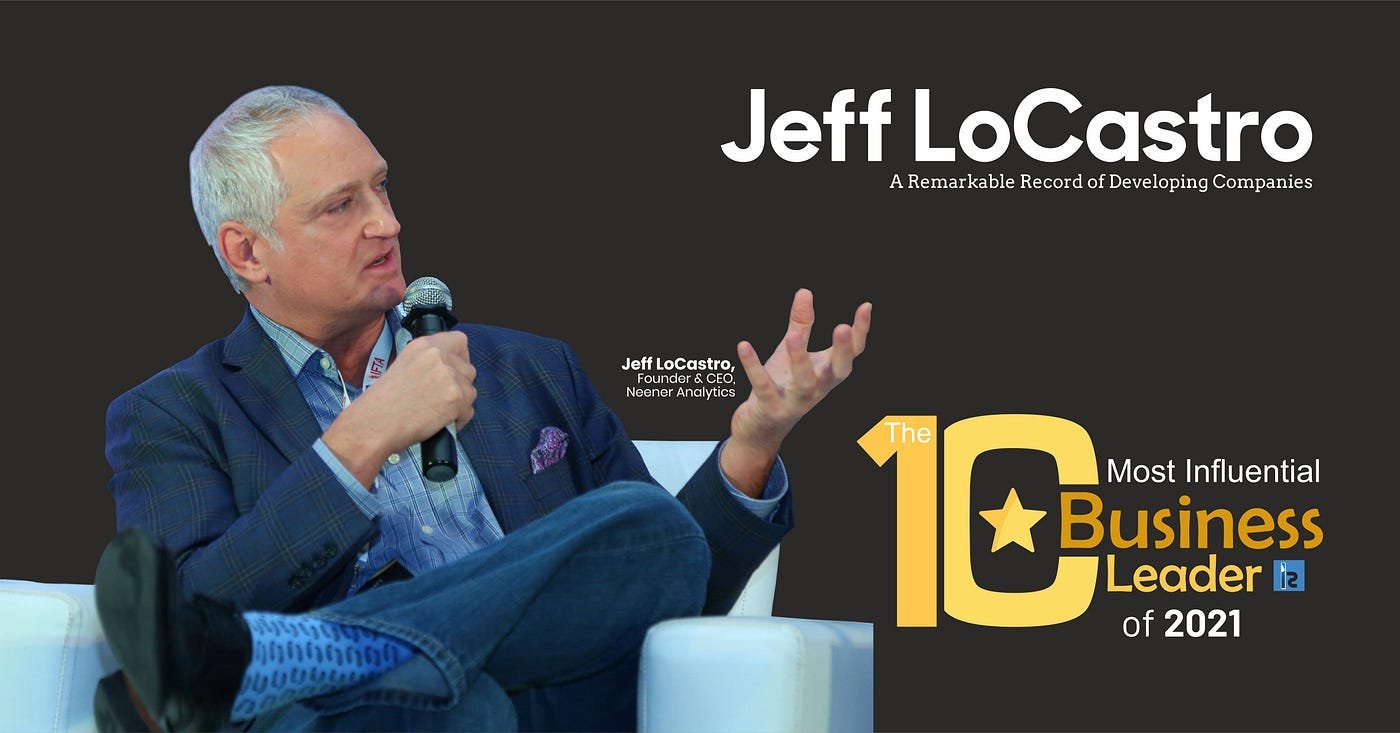
Jeff LoCastro, Founder/CEO @ Neener Analytics

Through this questionnaire, our aim is to accentuate your organisation, the services/products you offer, the problems you solve for your consumers, your contributions to the society, and your strengths in the national and international markets. We are looking for crisp and perspicacious answers between 900-1200 words for the same.

  • Kindly enlighten us about the inception story of your business.

I lived in China for two years scaling one of my US businesses there. About 6-months before coming home, I made a list of the first things I had to do when I returned. As my California Driver’s License had expired while I was out of the country, that was the first thing on my list. And I wondered why that was? How had that made #1. I still knew how to drive. But it was #1 because it was no longer valid as an ID. That made no sense. I’m still me. So, I was only “valid” if the California Department of Motor Vehicles said I was? That’s insane. I thought, “how did my grandparents’ function without walking around with ID’s?” Further, “How was he able to get a loan,” or whatever, “without a wallet full of government ID’s or even a credit score?”  He was able to do it because his banker, for example could say, “I know you!” The banker knew my grandfather’s story.

And where is that story being told? Social Media. Neener Analytics was born.

  • What are the various products/services offered by your enterprise, and how are they unique or different from the existing products in the market?

We look at it this way: “What if you could sit each customer down with a psychologist and ask them, “are you really going to pay us back?”  Because that’s the question, right? The question is not CAN they, the question is WILL they.

What we’ve developed is a regulatory compliant 1-click cognitive AI-based 100% consumer opt-in financial risk decisioning technology using Human-Data Science™.  Using Cognitive AI, Neener Analytics has cracked the code on Small Data to recapture on average 22% of a lender’s rejections without increasing the lender’s current risk threshold. This is cognitive AI, not machine learning. Huge difference.

Better decisioning is not a “data” problem. It’s a “Human” problem. Lenders don’t want to know if the consumer’s “data” is going to pay them back . . .they want to know if the consumer themselves is going to. Which is why we have pioneered Human-Data and created the branch called Human Data Science™

We’ve got 2 product lines Click-based & Chat-based. 5 result products: Default Risk, Transactor-Revolver, Risk Alignment, Veracity, Resiliency. ARIA (our AI) produces binary outcomes, just like human beings make decisions about other human beings. All delivered in a Json. Our solution takes <15mins to implement, can be integrated with any core, and if used ONLY at Rejection Recapture no core integration is needed. We are in 11 countries, and average 87% opt-in rate (99.98% @ rejection). Consumers want this.

We are Small Data, not big data. We’ve cracked the code here and developed the most advanced AI & Deep Learning to crack the code on Small Data. Everyone to this point have been using Big Data: aggregations and pools of affinity to create correlations masquerading as an “individual” prediction. Our AI & Deep Learning creates and individual matrix on each consumer that manifests in binary Outcomes, not scores or behaviors.

Our system is making decisions about the applicant the exactly the way humans make decision about other human beings. Not based on what they talk about (big data), but rather how they talk about those things (small data). Exactly, like humans… except better, with higher accuracy and less bias.

  • In a highly consumer-oriented market, how much importance do you pay to quality and authenticity?

We are always focused on that. This business didn’t start as a great way for banks to make more money.  It started because 88% of global consumers are thin-file, no-file and credit challenged. 88% globally. These are the invisible consumers; invisible not because they are high risk, but rather because current risk assessment systems simply don’t work for them. This is a massive problem. I contend that this is the biggest problem in the world. You cannot build a middle class or improve the standard of living for a society or individual without access to financial products and services. And you cannot deliver that access if the risk of the engagement cannot be assessed.

  • According to you, what are the most important qualities an entrepreneur should possess?
  • Share the Vision: Great entrepreneurs have a way of getting great people excited about the future; the ability to inspire.
  • Create a Mirror: Always make sure the team sees that you are willing to give as much as you demand from them.
  • Chart the Path: Great entrepreneurs can see the path before them and can show their team that it’s real. Pretty important: A vision with no path is just a fantasy.
  • Empower Execution: Great entrepreneurs allow great people to get things done. Sounds simple to say, but bad entrepreneurs are control freaks. Great entrepreneurs question, and course-correct
  • Do you believe there is a winning formula for becoming a successful entrepreneur? What is yours?

Think differently – constantly. Attack the status quo – daily. Only then you will make room for new ideas and better ways to do things; only then you move beyond ‘nuance’ and into full fledge disruption.

One of the things that has made Silicon Valley so success is that failure is encouraged.  That sounds odd to some, but you don’t advance without lots of mistakes. When a start-up goes out for venture funding, the 2 top questions the investor wants to know are 1) tell me all the good stuff that is happening, and 2) tell me about all the mistakes you have made.  They WANT you to have made mistakes . . .with your own money, not theirs.  If you tell them you haven’t made any mistakes . . . they will show you the door right away.

So, living in an where failure is embraced as a potential outcome moves things forward. That doesn’t mean we hope for it, it means that the fear of failure isn’t an obstacle because in any technological advancement, a lot of failures occur. And, when people aren’t afraid to fail, things can move very quickly.

If you are only focused on “winning”, you are not focused on the things it takes to win.

  • Mention some awards and recognitions received by your company.

BEST OF SHOW: 2017 Finovate Silicon Valley

https://finovate.com/videos/finovatespring-2017-neener-analytics/embed/#?secret=1BtoNETn7L

BEST OF SHOW: 2019 Finovate Silicon Valley

https://finovate.com/videos/finovatespring-2019-neener-analytics/embed/#?secret=rovHLl5MVd

#1 IN WORLD FINANCIAL INCLUSION:  2019 Finovate Global Awards 

https://finovate.com/drumroll-finovate-awards-winners-announced/embed/#?secret=XmMRE9tjNK

FINALIST: TOP 8 AI IN THE WORLD: 2019 Finovate Global Awards 

https://finovate.com/finalists-announced-for-the-first-ever-finovate-awards/embed/#?secret=pHRlwPm6mW

#1 RISING STAR AWARD:  2019 India Fintech Awards

https://www.expresscomputer.in/news/india-fintech-forum-announces-india-fintech-awards-ifta-2019/44263/embed/#?secret=XVIM9RBRg1

2021 Fintech Americas Conference: Silver Award, FINANCIAL INCLUSION (For our partnership with Invex Banco, Mexico)

Winners

https://www.fintechamericas.co/winners/embed/#?secret=J5DoG23mkN
  • The market is extremely volatile, what is the current scenario of the industry you are involved in? Where do you think we are heading towards as an economy?

The global economy fluctuates indeed, but only certain sectors should be considered volatile. 2020 was an outlier. A slow-down that was man-made instead of market made. That’s never happened before. That decision made the entire economy appear volatile because of the overt uncertainty it injected. As a result, we had lenders just stop lending. It was crazy stuff. But around October, November 2020 they were all ready to get back to it because they collectively understood, as I said, this was not a market cycle but rather an overt decision. We are really starting to see that uncertainty lifting and everyone getting back to business as usual, as they should.

  • Where do you see your enterprise in the next ten years?

We are really pioneering the idea that the consumer is their own data. And the consumer as their own source of data is the future of all consumer engagement. We are currently in 11 countries, and I see us owning specific market regions in the next 10 years. We’ve already built out 2 product lines, third one coming in Q4/2021 each delivering 5 decisioning products and are on track for a new line each of the next 5-years while continuing to expand our decisioning capabilities.

  • What advice would you give to budding entrepreneurs?

I could write an entire book on this question.

Building and scaling a company from only an idea will be the most difficult thing you will ever do in your life. And it will also be the most professionally satisfying. It’s not a hobby, and its not a job. It’s a passion. You can’t play-act it. You have to live it. And you should be ready to sacrifice for it. I always say that if you are in a personal relationship at the time, a successful entrepreneur should always have a loving partner at home that also understands the sacrifice. If that person at home is a source of angst (because of the consuming nature of the endeavor) . . . the business OR the relationship will fail.

Posted in men

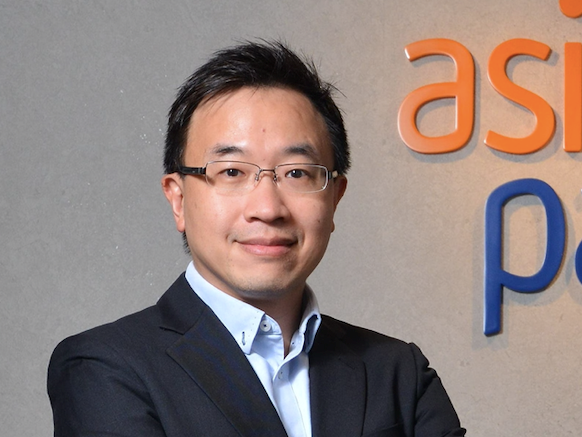
Joseph Chan -Founder and CEO – AsiaPay Group 

The CIO Times interviews Joseph Chan – Founder and CEO – AsiaPay Group 

  • Kindly enlighten us about the inception story of your business.

I spearheaded AsiaPay with a sole drive of bringing safe and convenient payments in different Asian markets and industries. My visionary takes on electronic payments has started as a Hong Kong -based firm back in 2000 and is now operating worldwide.

Before building my mark on the industry, I always aim towards delivering the consumers their desired payment methods and merchants’ integrated settlements, which stands as key factors why AsiaPay is built. The award-winning payment solutions that I started, eyes for the future generation’s potential for card and mobile-based financial settlements.

  • What are the various products/services offered by your enterprise, and how are they unique or different from the existing products in the market?
  • AsiaPay provides multi-payment methods ranging from one-stop comprehensive credit and debit cards, eBanking, QR payments, and P.O.S. It also comes with a multi-currency payment feature that accepts payments from cross-border countries. AsiaPay also runs a multi-channel platform that allows convenient payment transactions from any web-connected device. AsiaPay enables merchants to securely accept the most popular digital payment methods from credit cards, internet banking, and more on a single platform.
  • Award-winning one stop payment management (Single platform for multi-card, multi- currency, mutli-acquirier processing and settlement controls)
    • Comprehensive payment coverage (Widest range of credit, debit payment options and acquirers, covering 100+ banks and payment brands)
    • Multiple Payment Channel Capability
    • Comprehensive Risk and Anti-Fraud controls (PCIDSS compliant since 2006, with built-in anti-fraud and risk management system)
    • Robust and Certified Technology (3-D Secure and Digital Wallet Vendor for Visa, Mastercard, American Express, JCB, Discover Global Network and UnionPay in Asia-Pacific)
    • Reliable and High Availability + 99. 9%
    • Flexible and Highly Customisable
    • Extendable and Expandable
    • Proven Track Record and Solid Industry Expertise
    • Broadest World-class Enterprise Service in 13 operative offices in Asia-Pacific
  • In a highly consumer-oriented marketed, how much importance do you pay to quality and authenticity?
  • AsiaPay values every merchant as a partner to support their business growth in financial terms. As part of our goal to innovate, we newly launched as:
  • SDK to facilitate a secure interface from merchants’ mobile APP to our gateway.it supports in-app payments for iOS and Android operating systems.
  • AsiaPay AppPay serves as a convenient APP tool to merchants that can offer seamless ePayment to their customers by completing their ePurchases on the go via mobile devices. generate the payment links or QR codes and share with your consumers and get paid. Merchants can maximize their business productivity and generate more sales and profitability.
  • Retailers can strongly initiate an eWallet payment such as SmartPOS that can drive your in-store sales performance, powered with valued added functionalities just like what AsiaPay has to offer.
  • Communication, AsiaPay provides guideline & Training to Merchants on how to use our payment platform & system. meantime organizes Training Workshops for merchants regularly.
  • Convenient, we newly launched Revamped Merchant Admin Portal, this update is part of a larger effort to modernize and simplify the administration experience for our valued clients.
  • According to you, what are the most important qualities an entrepreneur should possess?
  • Innovator
  • Builder
  • Communicator
  • Do you believe there is a winning formula for becoming a successful entrepreneur? What is yours?
  • Embrace changes and technological evolution. Effectively implement the vision with a like-minded professional team;
  • Be aggressive and stay agile;
  • A clear vision of what you want to achieve
  • Sustainable development: an important driver of enterprise growth
  • The internal driving force of the enterprise: market competition, promote the enterprise to continue to innovate, improve technology and management, improve the core competitiveness of the enterprise
  • external driving force: implementation of the national development strategy, the scientific concept of development requires the implementation of innovation-driven strategy, strengthen scientific and technological innovation
  • Mention some awards and recognitions received by your company.
  • Best Digital Payment Solution Provider Singapore 2020 by Finance Derivative
  • FinTech Awards 2020 in Corporate / Merchant Payments Initiative – Outstanding Online Digital Payment Solution by etnet, 2021
  • The 10 Most Disruptive Tech Entrepreneurs to Look for in 2020 by Mirror Review
  • Stars of China 2020 – Innovation in Payments by Global Finance
  • Retail Innovation Award 2020 by Hong Kong Retail Technology Industry Association Ltd
  • Best Payment Solution Provider Asia Pacific 2020 by Global Banking & Finance Review
  • FT: High-Growth Companies in Asia-Pacific by The Financial Times
  • The market is extremely volatile, what is the current scenario of the industry you are involved in? Where do you think we are heading towards as an economy?

Digital transformation is constantly upgrading. AsiaPay is on the move toward digital innovation and disruption that can change the way we live and do business for the better. In Covid-19, a consumer using digital payment more, our company do cope with this opportunity

  • Expand and focus more on other “distribution channels”
  • Retailers with more aggressive online sales home delivery/ consumables
  • Heavier sales and promotion activities on social media
  • We launched Retail Payment AsiaPay AppPay
  • Value-added Payment Solutions
  • Mobile Payment: Mobile in-app SDK
  • Comprehensive data Analytical tools for digital merchants.
  • Keeping one eye on the road ahead could allow us to exit the crisis with a more customer-focused, efficient, and resilient payments industry

At AsiaPay we

  • strive our best effort to take advantage of the latest digital payment and commerce technologies to generate new values and opportunities to banks and merchants in Asia, that enhance customer experience, business growth, and competitive edge especially under the current uncertain times.
  • We create Business innovation to provide a good customer experience.
  • Digital currencies have the potential to extend the value of digital payments to more customers
  • We want to help shape and support the role that digital currencies will play in the future of currencies
  • Where do you see your enterprise in the next ten years?

Clear Strategic direction

we strive to provide secure, integrated, and most comprehensive payment processing services for businesses, charities, and associations, and payment solutions blending the latest technologies for the financial / banking industries that readily enhance one’s quality of life and maximize business opportunities, efficiency, and productivity.

To become a trustful payment service provider, we have communicated and encouraged R&D colleagues to continuously refine and upgrade our payment products over time, enhance our security technology, introduce new products according to customer’s requirements and needs.

What advice would you give to budding entrepreneurs?

-Demonstrates perseverance in the face of adversity and overcoming obstacles.

-Demonstrates strong leadership skills and an unflinching desire and determination to be successful

-Balance the concepts of effectiveness and efficiency of business plans.

-Be open to learn from others and gain experience.

-Show the capacity to be an independent thinker and to take on and manage risks in the face of uncertainty.

-Always have a mindset that adjusts to the constantly changing demands of this modern generation.

Posted in men

Dr. Mahesh Nair – Empowering Change Agents for a Better World

“You don’t have to be a hero to accomplish great things – to compete. You can just be an ordinary chap, sufficiently motivated to reach challenging goals.” – Sir Edmund Hillary.

More often than not, the heroes in our lives don’t wear a cape. Though we do think some of them deserve it, at least an invisible one! They roam around us as common people only showing their heroic side when the moment arrives. And once done, they like to slip back into oblivion. They can be anyone, parents, friends, and sometimes, even complete strangers. They become the reason we hope for help, restoring our faith in humanity and human values.

What makes these individuals real heroes is that they serve humanity, not for their own interest but for the greater good. They are self-motivated and often start alone on their path of service. But they are also keen to pass on the baton and create more heroes out of common people. In 2007, when Dr. Mahesh Parameswaran Nair started his career as an IT Engineer in a leading MNC, he found a lacuna in his otherwise exciting routine. He noticed a regular rhythm to his life which revolved only around the electronic hum of computers and gadgets. He badly wanted to try something different in parallel which could yield him more happiness, positive vibes, emotional gratification, and possibly could change someone’s life on a positive note. 

Realizing that it is not just a passing feeling and that he needs to back his emotions, with action, Dr. Mahesh set out to start his NGO HOPE (Hold On Pain Ends). His NGO aims at working for the welfare of the underprivileged, raises relevant social issues, and also cares for nature, birds, and animals. Thus began his Social Entrepreneurship journey in parallel with his IT career. Since then, his social experiences have been widely shared with the youth. He also took up motivational speaking and has mentored many school/college-going students. 

Changing the mindset

Dr. Mahesh, through his work, aims to create change agents across the globe who could dedicate their time, energy, or resources towards Nation Building Process. He considers the youth to be the future of the nation. He firmly believes that the creation of opportunities in India is necessary to retain India’s talented youth. Once they are here, they get to see the various facets of society. This will help inspire them towards projects or activities which could not only bring out their hidden potentials but also empower the less privileged categories of society. Showcasing the issues prevalent in society is necessary to bring them to the mainstream and be acted upon. 

Creating Long-Term Solutions

Dr. Mahesh is aware that no matter what, people will eventually get bored off with a particular routine. So Innovations and Experimentations are required for overall sustainability. The working of an NGO is no exception to it. For instance, when they were cleaning Vellayani Lake, one of the freshwater drinking resources in Thiruvananthapuram district, the problem was more than what was apparent. The increase in the number of water hyacinths was creating drinking water scarcity and affecting fishing. His team started experimenting with the roots of water hyacinth and started producing eco-friendly sanitary pads. This not only helped them avoid the dumping of plastics in nature but also created job opportunities for single mothers, the elderly, and differently abled ladies. 

They reduced food unavailability issues through Community Refrigerator where excess food from homes or family get-togethers could be placed to feed hungry homeless people. They have also developed a mobile application named “KINDSERV” to convert all humanitarian offline services to online on a single fingertip click.

Spreading HOPE

Dr. Mahesh has always focused on creating a unique identity for HOPE. His primary focus on client satisfaction and trust has led HOPE to develop into an NGO that clients relate with and choose for humanitarian projects. The team always hits schools and colleges to build new networks. Adaptation and flexibility have been two must-have qualities required to bring everyone under a common umbrella. Opinions do vary from person to person in the team as is in every sector, but being the final decision maker Dr. Mahesh has always been cautious. He tends to think and have Plan B and Plan C also in place before executing Plan A. Foreseeing the risk factors (especially after the Pandemic) has been important for proper planning and execution.

Through his work and his style of working, he has always wanted to pass a message to his team, students, social media followers, or aspiring young Social Entrepreneurs that if a normal person like him could change someone’s life or bring a social impact, we all could collectively bring a huge positive social impact. “There is a leader in each amongst us. The platform is open and is all yours. The quality of work done was more important for me than the number of people involved. Many people aspire to do something good but always halt as they don’t know the answers for many of the questions like how, why, when, where, and what to? Being a mentor, guiding them to these answers, and showing them the right direction was my only responsibility. Creating independent change leaders across the country for a better India was my primary happiness. I believe the word “Charity” itself needs to be rephrased to “Social Responsibility”. I was always in search of fresh minds and young legs who could explore this platform and yield the best outputs. Self-improvisation and learning was always a part and parcel of this Journey and am still trying to improvise,” says Dr. Mahesh.

The pandemic and its lessons

Being a Software Engineer, Dr. Mahesh was always keen to brainstorm and do innovations, research, and add professionalism to the works or Projects he implemented through HOPE. This Pandemic era had a huge bad impact on many sectors worldwide but created new opportunities too.  It was during the pandemic that the team thought of taking up their services online. Individual donors or Institutions could connect with needy beneficiaries from anywhere in India and at any time for fulfilling blood, food, dress, book, toy, or various other requirements by using a mobile application. “We speak of Digital India and services too need to be digitalized in various sectors especially in rural and tribal areas also. Various social media platforms available today make it easy to connect with like-minded people, Entrepreneurs, Investors, Corporates or Volunteers across the globe,” adds Dr. Mahesh.

Message for Budding Entrepreneurs:

To all young entrepreneurs who wish to kick start – Opportunities never knock on your door. Rather rise, have short-term plans/milestones, and keep progressing towards your aim. If you don’t have an aim, have it first. Ask yourself. Know your boundaries. You may progress slow or may fall. But never stop. Learn from your failures. You can’t do things satisfying everyone. Feed your hunger, passion, and soul. Have answers to how, why, when, and where before actioning. Improvise, Learn and Innovate each year. Upgrade your skills and win trust. It’s not going to be easy. But make it look simple. Mark your presence and activities on social media platforms and indulge the public and institutions. You don’t have to search for opportunities. Be a sugar so that ants would surround you in large numbers. Never postpone good things because the time which has passed away Never returns. Be productive every second. You become what you think and act. Best wishes.

The road ahead

Dr. Mahesh has brought HOPE to its current stage through his passion, hard work, commitment, and dedication. He has been transparent in his working style and in constant search for new opportunities or innovations to bring a difference to the NGO and/or its deliverables. Going ahead, he wishes to create like-minded change agents across the globe who could devote their time and energy to uplifting the underprivileged and bringing a positive impact on any social issues. He dreams of a world free of any NGOs or Charity Organizations and everyone is made independent and self-sustainable. It’s each and everyone’s social responsibility to Emerge, Empower and Evolve for a better nation. “I dream of a developed India and see more exports happening from India than imports. I dream of an India where foreigners would love to come, earn, settle and invest. We are rich in natural resources, cultural heritage, and diversities in art, culture, etc still are unaware of how to use this efficiently for better output. Corona and Drastic climate changes are a huge threat or could take away from us the real pace or momentum. The regulations set by WHO or Government could affect the progress but being a service providing NGO we are bound to accept these challenges,” concludes Dr. Mahesh.

Accolades:

  • 2022 Inspiring Indian by Book of Records.
  • 2021 India Book of Records Holder for feeding maximum homeless across streets of India
  • 2021 Dettol India COVID Protector Title
  • 2021 Social Entrepreneurship Excellence Award from Smt Chinchu Rani, Honorable Minister of Diary, Government of Kerala.
  • 2021 Social Service Award by DLSA (District Legal Services Authority) Kasargod, for the upliftment or empowering works towards SC/ST people.
  • 2020 India Star Independent Award for

Philanthropy and Services

  • 2020 Shortlisted by Better India amongst top 6 Indians for COVID WARRIOR title
  • 2020 Man of Excellence Award by IAF
  • 2020 ICF Humanitarian Award from Shri. Pradeep Tamta. (Member of Parliament Rajya Sabha)
  • 2020 India Star Award for Philanthropy and Services
  • 2019 SevaKendram Award for Humanitarian

works

  • 2019 Art of Living Sevaretna Award
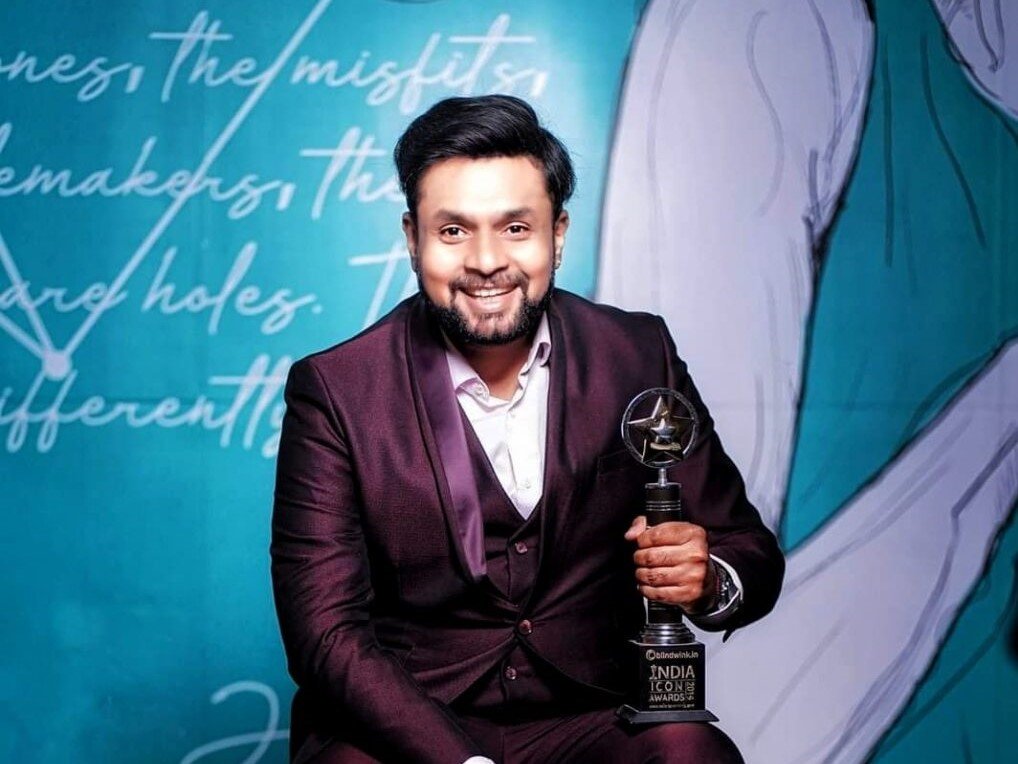
  • 2019 Indian Icon Award from Bollywood Actress Dia Mirza
  • 2018 TNF Indian Icon Award for Charity
  • 2017 Nirbhaya Debating Society Youth Icon

Award from Dr. Shashi Tharoor Member of Parliament

  • 2016 Best NGO Award for HOPE by Padmashree Jayaram

Alex Sharpe -A Trusted Advisor to Unlock Business

Innovation mirrors the progressive way of life that human beings want to live and strive for. Questioning the status quo, finding new ways and making attempts to better the previous version, be it life or a product is human nature. 

Most people do not realize, that we as humans are predisposed to innovate. We innovate by pulling things from different experiences and combining them in new ways. Innovation is not solely the purview of sudden inspiration. In practice, innovation is actually the culmination of experiences and the ability to look at those experiences in different ways. The more we experience and are allowed to be creative, the more we tend to do what is natural, to innovate.

At Sharpe Management Consulting LLC, Alex Sharpe makes sure that the innovative spirit of his team member never wavers. As an innovative leader, he lets his team be while affording them diverse experiences.

Question to Perform Better

Alex believes that it is critical to ask oneself, “why?” during the work process. Is there a particular problem you are trying to solve, or do you have an innovative idea that we need to figure out what to do with it later? How you think about the outcome has a huge impact on your thought process. Viewing things through different lenses is one of his favourite things to do. 

While working with teams, Alex likes to play both the coach encouraging them to expand their thoughts while also being the official rock thrower, playing the devil’s advocate challenging their ideas and pushing them out of their comfort zone. What about this? How about that? How would they do this in Europe? What if we were working in a different sector? What are the top three things we absolutely do not want to do?

Having a very diverse background with lots of interests, Alex is often in the best position to pull examples from diverse disciplines, other sectors, and different cultures. He encourages folks to walk showroom floors at industry shows and conferences. Even if it is not your industry. It is incredible what you will find. “On one occasion, I found, believe it or not, some specialized cables at an accounting show that solved a problem for a customer with a service business eighteen months later. On another occasion, I was able to help a significant hospital group improve its operations by using a process created at an online brokerage for their customer service,” he shares.

It all started with Self-realization

Growing up, Alex was fascinated with what we now call STEM. He had a passion for how things worked and how advances in science and technology made businesses stronger and people’s lives better. He was fascinated with how human productivity is driven by technology and innovation. He also realized, that one of the things he did well was bringing together thoughts and lessons from diverse disciplines to optimize the whole.

Analyzing his potential, economic conditions and interests, he decided to be an engineer because he liked to build things. He also figured that he needed to eventually get a business degree and develop his skills in operations, economics, and the like to truly make a difference. Alex says, “Mentally I crafted a strategy to get the engineering degree first with the business degree later. To sum it up, the more I learn, the more I realize things are related. Nothing really stands alone.”

Building a Company with a Difference

People often ask Alex “What is your secret sauce?” It seems to him the business model behind any services business is pretty straightforward. It comes down to execution. It is kind of like great chefs. They all have access to the same ingredients and the same tools. Why do some have successful restaurants and others do not. Simple, execution. And his tremendous track record of being in business for over 20 years and delivering to clients in almost 30 countries across the globe is proof of his expertise. 

Two principals have been the foundation of every business that Alex has run and every team he has ever led. First, the client is the hero of the story. Second, technology affords an opportunity. But it is the people and process that unlock that value. The business model and Governance are the most important to value creation.

Too many times, Alex has seen people and businesses forget they exist because their customers find value in what they offer. The moment an organization forgets that simple premise, everyone loses. He imparts a sense in his team that if they give their clients what they need, they grow and no longer need them for that task ever again. In reality, they want clients to know they act in their best interest, so they bring us on the next journey with them and also recommend them to their friends. 

As per Alex, “I suspect people will always embrace what adds value and prefer to work with other genuine people. Our job is to be a guide, a coach, and an advisor, more like being Obi-Wan or Yoda to Luke Skywalker than being a subject matter expert. Hard skills can be taught. Soft skills cannot. Soft skills can be developed through awareness, but in my experience, soft skills rely heavily on how individuals are wired. The soft skills transform you into a trusted advisor.”

As regards the second foundational principle, advances in technology incrementally change the way we work and live but unlocking its value takes an ecosystem of people and processes. Most important is the Governance that ensures your activities are aligned with the desired outcome and ensures the effective use of resources. That nexus is required to unlock the value. Governance must evolve as the technology and the organization grows. In the early stages, you want a Governance program that is more like guardrails to help ensure you do not drive off the road. As things mature, you want something more prescriptive, like what you might see from an industry body or a regulator.

A Message for the Young Entrepreneurs

Alex has dealt with lots of entrepreneurs. Some have done well, others have not. To paraphrase Reid Hoffman, co-founder of Twitter, “Being an entrepreneur is jumping off a cliff, knowing you will grow wings.” That pretty much says it. The most important thing to know, per Alex, is if you are wired to be an entrepreneur and, if so, what stage suits you best. Folks often forget that last part. The earliest stages require the most depth in your field. As you move further to the right, the business aspects and the ability to manage your growth become the most important.

Entrepreneurs know their craft. They often struggle with the rest. He asks them to be sure to know their business model and surround themselves with people who share their values. “More importantly, be sure they have skills you do not. The biggest mistake I see from entrepreneurs is, that they often hire weaker versions of themselves. Surround yourself with people who will challenge and compliment you,” advises Alex.

He explains, “I remember a failed start-up that was doing innovative things with network gear. Everyone, including the finance team, had a networking background. No! You want your finance people to understand finance. You want your sales team to know how to sell. Knowing your business, your customers, and your industry is critical. These folks need to know their discipline first. They can learn yours while on the job.”

Also, Alex advises them to never forget to fail fast and always be sharpening their saw. “Business plans are great. Go-to-Market (GTM) strategies are necessary. Neither survives first contact with the customer. Learn and evolve. Keep in mind, that the act of planning is more important than the plan itself. The plan becomes a communication tool for the team and a baseline, so you know what to change. Be sure to explore, learn, fold those learnings into the business and move on,” concludes Alex.

Dr. Hani Hamza -CEO, Smart Homes Engineering

The very definition of leadership has evolved substantially owing to the paradigm shift in the world of business. From conference rooms to endless video calls, the approach to being a leader has been reformed to accommodate the changing preferences of the workforce.

In such a setting, a leader who possesses empathy and compassion along with the right set of skills becomes a necessity. This edition, the Five Most Dynamic Business Leaders to Watch in 2022, brings to you exclusive insight into the world of such business leaders. On that note, featuring on the cover of this edition is Dr. Hani Hamza, the CEO of Smart Home Engineering

Dr. Hamza is an engineer turned entrepreneur. Owning and running his own business has always appealed him. However, for a while, he has been thinking that transitioning from being and engineer to a business owner was quite a career jump. Reflecting on his path and realizing the skill sets needed to do both, he now knows there’s quite an overlap of applicable business skills that are useful in both spheres.

“If I had to describe an engineer’s role in only a few words, it would be ‘we solve problems’,” says Dr. hamza. He adds that engineers have been trained through university and experience to break down the problem, control variables, measure, test, and verify. Starting, running, and growing one’s own business is loaded with unforeseen circumstances and problems that need to be solved.

“As the owner of Smart Homes Engineering, my day may now be filled less and less with technical issues, but there are always new challenges to navigate,” adds Dr. Hamza. Having started his journey as an employee in an engineering consultancy, he learnt to deal with customers and the market needs and requirements.

With all that knowledge and experience, he started to personally deal with his own customers in his free time, designed their projects, and supervised their construction till he built a wide foundation to start his own consultancy.

Changing Definitions and Perspectives

When asked about qualities a business leader must possess, Dr. Hamza says, “The right qualities of a leader can make all the difference. To be able to listen, not hear, and communicate, not order, is what any employee would find valuable in a leader. If a business leader can establish trust with their team, employee retention, productivity, and engagement can increase significantly.”

Sharing his views on opting between micromanaging and efficient management, Dr. Hamza says, “I believe micromanagement is a skill, if done right. Not everyone can be good at it. Not everybody has the capacity to watch and control every single step of a process.”

“Bosses who stick their noses into every single detail because they have nothing smarter to do are the representative of micromanagement done wrong. But bosses who closely monitor, provide detailed guidance and corrective feedback when needed are something totally opposite,” he adds.

According to Dr. Hamza, the following are a few reasons why micromanagers can be great for teams and companies at the same time:

  • They are highly involved and engaged with their teams
  • They are capable of foreseeing and preventing
  • They want to get the best out of people
  • They can develop empathy naturally
  • They know what, when and to whom they can delegate
  • They can adapt their style to different characters
  • They can add value to almost any given department

Bestowing the Keys to Excellence

We asked Dr. Hamza for his advice to young entrepreneurs who aspire to venture into entrepreneurship, to which he said, “I hope this advice provides some insight to fellow engineers interested in following a similar path to mine, or those just looking to learn from someone’s business trials and tribulations along the way:

Work for a small company first: learning beyond your job title

I took the long road to becoming an entrepreneur and would do it again if I had the chance. I worked for someone else and learned on their dime for more than 12 years before venturing out on my own.

I recommend finding company that is less than 100 people, but growing, and earn a salary while learning from them and challenging yourself. Get to know the owner or CEO with the goal of learning as much as you can and growing while you’re there. The CEO and company leaders at a great small business will appreciate you taking the initiative in having a greater interest in the company beyond your job title.

Also, I recommend switching job responsibilities every few years. This allows you to constantly challenge yourself and learn new skills. 

Get out from behind the desk and get in front of customers: listening to people

There’s a lot of talk about being customer-centric for a reason. You will never learn as much about a business as when you listen to your customers. Don’t misunderstand, being an engineer can be very fulfilling, however, if you want to take that step from engineer to entrepreneur, you need to get out from behind the computer and in front of customers.

As an entrepreneur, part of listening to customers involves problem solving in a customer-focused way. As an engineer, you may be able to think of 100 things that should be fixed with what you’re developing, but the customer will tell you about the five things they really care about, and two of these would not be in your list of 100. I know it’s hard but forget about the rest of the 97. You’ll get to address them later down the line.

Get used to being uncomfortable: uncertainty and growth

This may be a generic life lesson and not specifically tied to being an engineer or entrepreneur, but never stop learning, innovating, and pushing yourself. As soon as you’re comfortable, move on and learn something else. Embrace being uncomfortable.

Of course, the thing that will be the most uncomfortable, should you choose this path, is to leave that regular paycheque. Let me tell you that while I was uncomfortable too, it was the best decision that I ever made, and not just because my company has had success. Leaving my regular paycheque was liberating and I very, very quickly got over being uncomfortable with that decision, because you gain back an overall sense of control you don’t have when major decisions are being made by people above you in the organization. I believe that being an entrepreneur is much less of a risk that you may think. Strangely, it was always the outside people who felt like it was some huge risk. Other than the initial leap, I never felt that.

Win often but lose early: using resources wisely and pivoting ideas

‘Win Often’ is self-explanatory, so I want to discuss ‘lose early’. Engineers don’t like to lose. Maybe no one does, but for an engineer, we are trained to never admit defeat. Maybe what we’re working on doesn’t work as well as we’d like, maybe we just need ‘one more week’, but given the opportunity most of us will work on a problem until it is solved. This is an instinct of engineers that does not translate well to a new business.

When I say, ‘lose early’, I do not mean ‘give up’. When a business is small, you have very limited resources, so cast a wide net, but do not try to close every account or deal. Sales cycles are longer than you planned, so if you do not get interest from your prospective customer quickly, ‘lose early’ and put your resources in more promising areas. 

Don’t misunderstand: ‘lose early’ also does not mean ignore that customer forever. While you cannot be actively pursuing all customers, checking in once a quarter with those that were not initially interested is not a large investment in time, and could pay off in the future. You should make your case, show them what you are capable of, and leave them impressed. I cannot count the number of customers we closed years after the first encounter.

I hope that the experiences that I have shared above are helpful in your decision making. While my path is surely unique, I wanted to show moving from engineer to entrepreneur is not as big of a jump as you might imagine. You will use much of the experience you have already received, and you can use your engineering skills to figure out the rest.

I believe that you do not need an MBA to start or run a business and that the community is better off with more engineers as business owners. I hope these tips, learnings, and mistakes I’ve made will provide insights to those starting their own business, regardless of background. Whatever you choose, I hope that it will be rewarding. I know this path has been rewarding for me,” concludes Dr. Hamza.